
The Lunar Year starts on February 10, 2024, and ends with the Lantern Festival on February 25. Each of the 16 festival days has a unique name and holds special significance. It’s worth noting that different regions and groups may have their own variations in celebration dates, names, and customs.
New Year’s Eve, or Chuxi (除夕)
The New Year’s celebration starts with a family dinner on New Year’s Eve, where traditions like toasting to the year’s achievements are observed. Children and married couples participate in visiting relatives’ homes, and the absence of a family member is symbolized by an empty seat at the banquet.
Days before, you gotta tidy up the house to attract the good spirits and kick out the bad ones. And hey, don’t even think about cleaning it on the first and second day of the Chinese New Year, ’cause that’ll make the good luck vanish!


Numerous important traditions are followed during the Chinese New Year’s Eve celebrations.
Food
The Chinese New Year’s Eve celebrations are just so awesome, especially when you talk about the role of food. It’s not just about eating – it’s about bringing everyone together and hoping for lots of wealth in the new year. The Chinese dishes with all their symbolic meanings are like the stars of the show during these celebrations, making the feast super special. Each dish and ingredient is picked because they look or sound like something that brings good luck for the new year, adding a whole other layer of meaning to the meal.
Each dish has its own special meaning, and you can just feel the good vibes as you tuck in. A whole fish is all about prosperity and abundance, while a whole chicken is about joy, good fortune, and the fun of being with family. Every bite is like a wish coming true, adding even more meaning to the meal.
The go-to meal is Jiao Zi, also known as Chinese dumplings. It’s a tradition to sneak in a special filling or a coin into one of them. If you’re the lucky one to find it, you’re in for some good fortune in the coming year!
However, folks in southern China usually whip up some yummy niangao cakes (a rice flour cake). Some other old school dishes include spring rolls (a classic dish from East China), lucky fruits like pomelos, tangerines, and oranges, and long noodles that symbolize the Chinese wish for a long and happy life.
Plus, there are these super cool Chinese phrases that are all about wishing for good things in the new year, like “may there be fish every year,” which is basically like saying “may there always be plenty for everyone.” The traditions and customs around the food just make the celebration so much more special, creating a vibe that’s not just about eating, but about feeling connected and happy.
Gathering
The party doesn’t stop at just the food during New Year’s Eve – in Chinese towns, especially in the South, folks throw big family banquets called the Happy Gathering. It’s the last meal of the year, so everyone sits down together to dig into some tasty traditional dishes and let loose with some drinks.
But before the feast, every family has to honor their ancestors, going back 3 or 4 generations. They set the table with different dishes and a seat for each ancestor, and the oldest family member pours drinks for them. After the banquet, everyone start to sing, chat, play cards, and have a good laugh – often staying up late until the next morning.
Other traditions during Chuxi
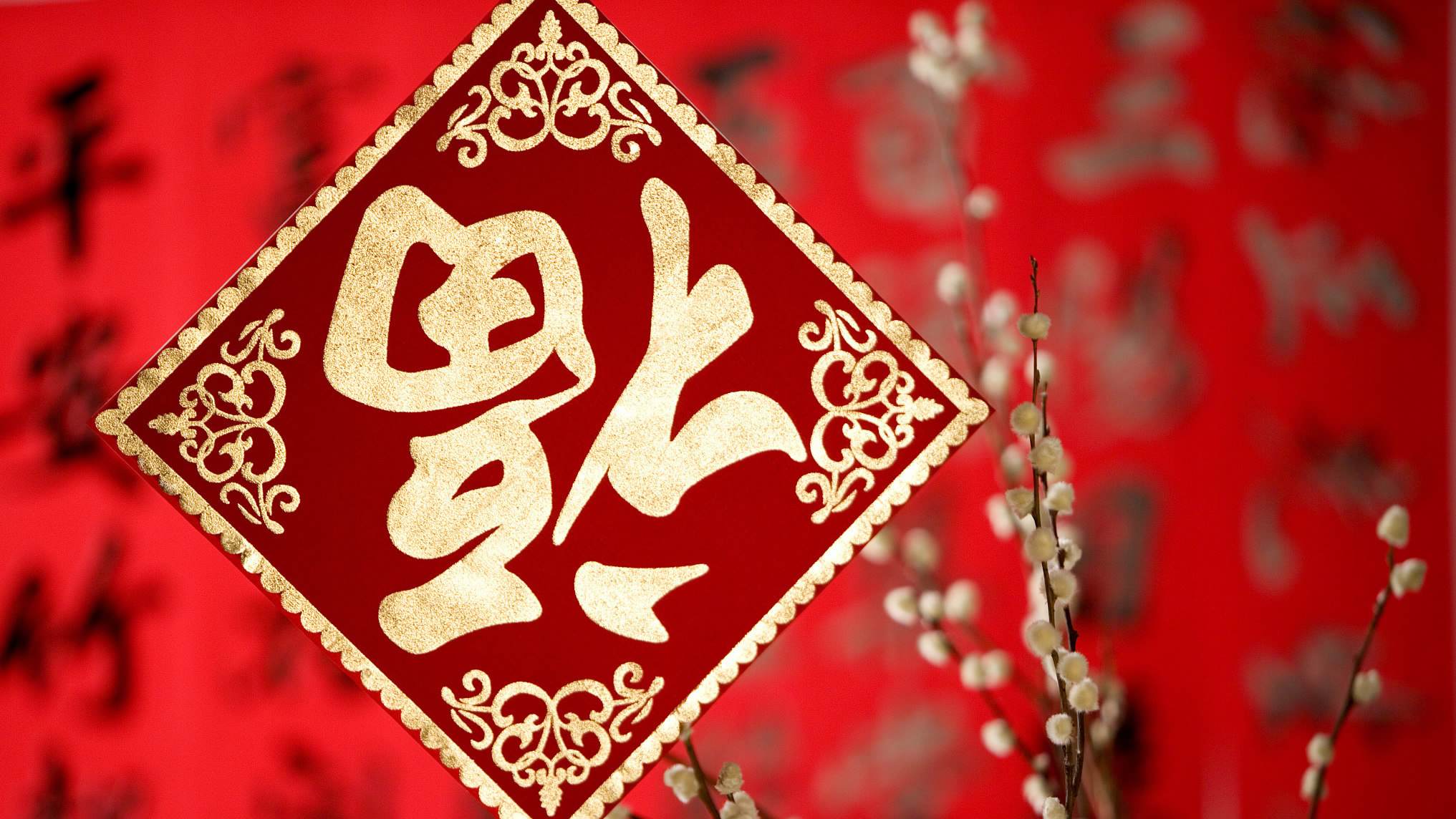
The morning before, you can spot the spring distiches plastered on doors, always in red. These distiches bear good luck sayings with the character “Fu” in the center. And, of course, people decorate their houses with red lanterns and some fresh New Year’s paint. Some even stick images of gods on their doors, especially the protective gods. Meanwhile, folks from northern China paste paper cutouts of agricultural motifs on their windows.
As for the kids, the elders hand them red envelopes with some cash inside, known as Ya Sui Qian. During dinner, it’s all about watching the New Year’s gala broadcast on Chinese television (CCTV), and when midnight strikes, firecrackers and fireworks light up the sky to welcome the new year.
Others prefer to head to temples and wait for the first bell of the year to ring at 12.
For an added dose of good luck, the Chinese rock red underwear, but anything else in the color red works too. Even during Lunar New Year festivities, red is the go-to color since it’s considered super lucky and brings in all the good vibes and fortune.
What Not To Do On Chinese New Year Eve
- It is important to not argue with people, swear, or curse
- Do not go to bed too early on New Year Eve – stay up past midnight or early dawn
- Don’t wear your old clothes
First Day (大年初一)
On the first day, lots of families chow down on veggie grub to kickstart the year with a clean slate. Others go all out with a massive feast to mark the beginning of the new year.
It’s all about family visits, starting with the oldies. They throw around the phrase “Gongxi facai,” which basically means “wish you joy and wealth.”
Some folks hit up the temples to get in on the early bird action of worshipping the gods.
Firecrackers, dragon dances, and all sorts of shindigs are on the agenda to spread the good vibes. The louder, the better to scare off the pesky monster Nian, who loves to stir up trouble on New Year’s Day. Oh, and don’t even think about spring cleaning – it’s a no-go on the luck front.
Second Day (大年初二)
This is the day when married daughters typically bring their husbands and children to visit their parents.
Some people have a big festive meal, especially business folks, to celebrate and wish for a prosperous new year.
Third Day (大年初三)
There’s this saying that the third day of the new year is prime time for arguments. That’s why a lot of folks just prefer to hunker down at home and avoid any unnecessary drama.
Legend has it that this is the day when the rats tie the knot, so it’s a good idea to leave out some rice on the kitchen counter and balcony as a wedding gift. It’s also best to hit the hay early, so as not to disturb the rat’s nuptials. In return, the rats are supposed to leave the family in peace for the rest of the year.
Fourth Day (大年初四)
It’s the day to honor the God of Kitchen (灶神)! Legend has it that the God of Kitchen heads back to Heaven about six to seven days before the new year to update the Jade Emperor on the family’s situation. On the fourth day of the new year, the God of Kitchen returns to keep an eye on the family. People prepare food and drinks to welcome the God of Kitchen and hope for a safe and accident-free kitchen.
Fifth Day (大年初五)
It’s the day to honor the God of Wealth (財神) and welcome good fortune. There’s a belief that we shouldn’t stay out for too long on the fifth day of the new year, just in case the God of Wealth decides to pay a visit.
It’s also considered a day to get rid of five types of bad luck related to intelligence, learning ability, literacy, life, and relationships. People will be up early cleaning the house and setting off firecrackers to chase away the bad luck. Some may take the opportunity to visit friends and classmates.
Sixth Day (大年初六)
Some places are like, “okay, the party’s over, time to get back to work, folks!” While others are all about hitting up temples, hanging out with fam, and catching up with friends.
There’s this wild legend about the Bathroom God making the rounds for a spot check on cleanliness, so peeps take this opportunity to scrub-a-dub-dub.
Then there’s the whole deal about kicking the Ghost of Poverty to the curb. People usually ditch their worn-out threads and other grungy stuff to send him packing.
Seventh Day (大年初七)
Some places go all out on the seventh day of the new year! Like, they toss seven types of veggies into a soup for good luck, munch on raw fish for a prosperous business, slurp up noodles to ensure a long and happy life, and even dig into a special congee with lean pork, liver, and kidney for academic success.
There is the legend that this day is the Birthday of Man, so some regions will celebrate it as everyone’s birthday
Eighth Day (大年初八)
Some folks believe that all the New Year’s festivities should wrap up today. It’s time to polish off all the leftover New Year’s grub.
Legend has it that the gods and goddesses will make a cameo in our world. We’ll be putting on some events to show them some love.
Some folks like to set their pets free, like fish and birds, to show some respect to nature.
Ninth Day (大年初九)
The day marks the birthday of the revered Jade Emperor (玉皇大帝), known as the God of all Heavens. Festivities will unfold throughout the day, resonating with vibrant celebrations. Some will bring fragrant flower candles to ponds and rivers, where they will offer heartfelt prayers to the divine.
Tenth Day (初十)
Today is a day of celebration as we honor Earth Mother’s birthday with a magnificent feast and an abundance of delectable treats. It’s also known as the Birthday of the Rock. Some people eat the symbolic baked bread, symbolizing wish for a year filled with harmonious pathways and prosperity.
Eleventh Day (十一)
Parents of a married daughter would invite the son-in-law to come home with their daughter and bring the children for a visit.
Some will also make offerings to Zi Gu, the guardian angel for women.
Twelfth Day (十二)
Today is the perfect day to get ready for the Lantern Festival, the big celebration marking the end of the new year.
There’s this old song that goes through the tasks for each day of the Lantern Festival prep, and it says that today’s the day to start setting up the structures for the festival decorations.
Some folks say today’s when the son-in-law should honor and pay respects to the wife’s ancestors.
Thirteenth Day (十三)
The timeless song joyfully proclaims that today is the day to adorn our surroundings with radiant lantern decorations for the Lantern Festival. With great reverence, some believe it marks the ascension of Emperor Guan to the realm of the gods. In various regions, it also signifies Lightbulb Day, a time to illuminate the area around the kitchen stove with fervent light.
Fourteenth Day (十四)
The song goes on about how today’s the day to jazz up the decorations and kick off the Lantern Festival.
The new year bash and traditions keep going with folks visiting different temples and having a blast with all the cool activities and shows like the dragon and lion dances.
Folks will also make offerings to the Goddess of Linshui, who they believe protects women from dying in childbirth.
Fifteenth Day (十五)
(元宵节) Lantern Festival

On this day, it’s a tradition to put lanterns in the water of rivers, seas, or lakes, or let them soar into the sky.
People also hang them in houses, shops, stalls, streets, and just about everywhere. Some even have cool riddles written on them, like a poetry enigma where you have to guess a word.
There are loads of fun stuff happening, like parades, shows, dragon and lion dances, Kung Fu demonstrations, acrobatics, and more.
The streets come alive with music, drums, and firecrackers.
The go-to festive food is the sweet rice balls (Tangyuan), believed to bring good luck and strengthen family bonds.
Originally, the festival was a way to honor the god of Heaven, a cheerful deity and the first of the Three Gods of Taoism who preside over the “Three stages.”
It’s kinda like the Chinese Valentine’s Day. Legend has it that in the olden days, when women rarely left home, Lantern Festival was their chance to go out, light up lanterns, and socialize.
This marks the first full moon after the lunar new year begins and signifies the end of the celebration.